Gluten-Free and Special Diet Dining at Fisherman’s Bastion (Halászbástya Étterem)
Practical guidance for guests with gluten intolerance or other dietary needs visiting Halászbástya Étterem: how to communicate requirements, what to ask your server, kitchen adaptations to consider, and recent guest experiences to help you plan a safe, enjoyable meal with the view.

Why a careful plan matters at a landmark restaurant
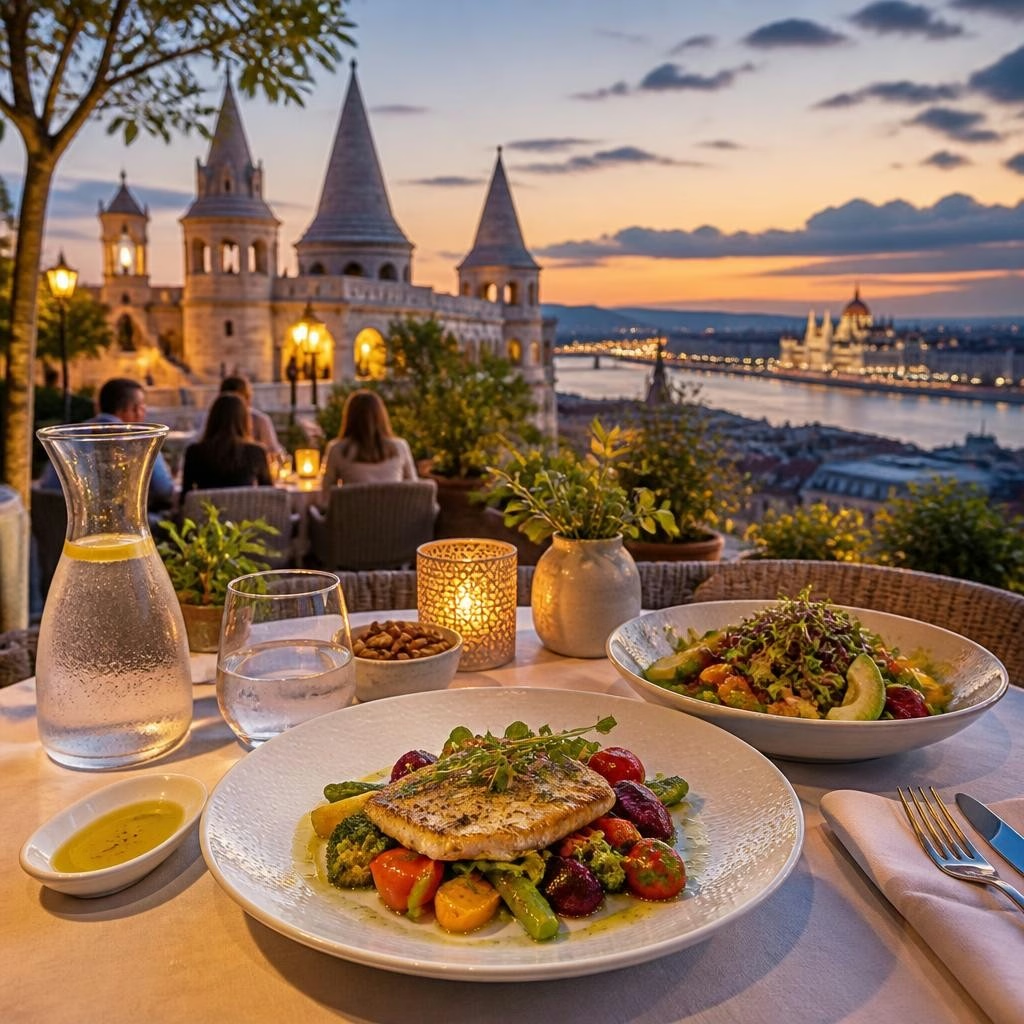
Halászbástya Étterem sits in one of Budapest’s most visited spots, with spectacular views and a menu that many guests describe as high quality and restaurant‑level. That setting makes it a fantastic place for a special meal, but it also means the kitchen can be busy and some dishes on the menu (for example, pastas, breads, small pizzas and many desserts) commonly contain gluten. If you have celiac disease or a strong gluten intolerance, a bit of advance planning will make your visit safer and more relaxing.
How to communicate your dietary needs clearly
Tell the restaurant as early as possible—when you book a table and again when you arrive. Use clear language: say whether you have celiac disease, a diagnosed allergy, or a milder intolerance. If you prefer, bring a short written note or translation card explaining your condition and the words you want the kitchen to avoid (for example, wheat, barley, rye, breadcrumbs, soy sauce made with wheat). This reduces the chance of miscommunication during a busy service.
Useful Hungarian phrases to have ready
If you’d like to communicate in Hungarian, simple phrases can help the front‑of‑house staff understand the seriousness of the request: “gluténmentes” (gluten‑free), “gluténérzékeny vagyok” (I am gluten‑sensitive), and “cöliákiám van” (I have celiac disease). A short, printed phrase is often more reliable than relying on ad‑hoc translation in a crowded restaurant.
What to ask your server when you sit down
When your server arrives, ask whether the kitchen can prepare gluten‑free options that day and whether they can avoid cross‑contamination. Specific questions that help: Do you have a gluten‑free menu or marked options? Are there separate utensils or preparation areas for gluten‑free dishes? Are fried items cooked in a shared fryer? Do sauces or soups contain flour as a thickener? Will bread or crackers be brought automatically to the table? Asking these directly helps staff give clear answers you can act on.
Typical kitchen adaptations and what to expect
Many restaurants can adapt dishes on request—for example, serving grilled proteins without breading, substituting a side, or preparing a salad without croutons. Kitchens may also offer naturally gluten‑free choices (vegetables, grilled meats, plain soups) or adapt recipes by omitting wheat‑based components. However, adaptations depend on the restaurant’s supplies and the day’s menu. It’s best to confirm at the time of your visit whether specific substitutions are possible.
Cross‑contamination: common hidden risks
Cross‑contamination is the main concern for people with celiac disease. Ask about shared surfaces, cutting boards, fryers, oil, and utensils. Sauces, marinades and even some spice blends can contain gluten. If the restaurant cannot guarantee separate preparation or dedicated tools, it may be safer to choose simple, naturally gluten‑free dishes or to speak with the chef before ordering.
What recent guests have reported at Halászbástya Étterem
Guests frequently praise the staff’s professionalism and courteous service at Halászbástya Étterem, and at least one recent visitor specifically reported a safe gluten‑free dining experience. This suggests the team is used to handling dietary requests. That said, review feedback is mixed about occasional service inconsistencies, so confirming details directly when you book and on arrival remains important.
Making reservations and arrival tips
If your dietary needs are important for health reasons, call the restaurant when you make your reservation and ask to note the booking as having a dietary restriction. When you arrive, remind the host and the server. If you have severe celiac disease, consider arriving a little earlier in service—when the kitchen and staff can more easily accommodate special requests—and ask to speak to the manager or chef if any doubt remains.
If you have a severe allergy or celiac disease: extra precautions
For people with life‑threatening allergies or strict celiac disease, be explicit about the medical nature of the restriction. Request that the kitchen use separate utensils and a clean surface for preparation. If the restaurant cannot confidently guarantee separation, it’s reasonable to choose a different venue or to opt for simple dishes you and the staff agree are safe. Bringing a small safe snack as a backup is a practical fail‑safe for peace of mind.
Final checklist before you go
1) Call ahead when reserving and note your restriction; 2) Bring a translation card with the words “gluten‑free” and a short description of your condition; 3) Ask the server about cross‑contamination, shared fryers and automatic bread service; 4) Choose simple, naturally gluten‑free dishes if in doubt; 5) Request to speak to the chef or manager for any clarifications. With a little preparation, you can enjoy the food and the unforgettable view from Fisherman’s Bastion while keeping your meal safe.
Article by